Tea & Phytotherapy
Rereading Japanese tea through the lens of phytotherapy
Green tea, matcha and black tea all come from the same plant species: Camellia sinensis.
On this page, I begin by looking at Japanese tea as a plant. From there, I reread the culture and knowledge that Japanese tea has built up over time, in the contemporary language of phytotherapy.
These are the questions I am thinking about now, and where I stand with each of them.
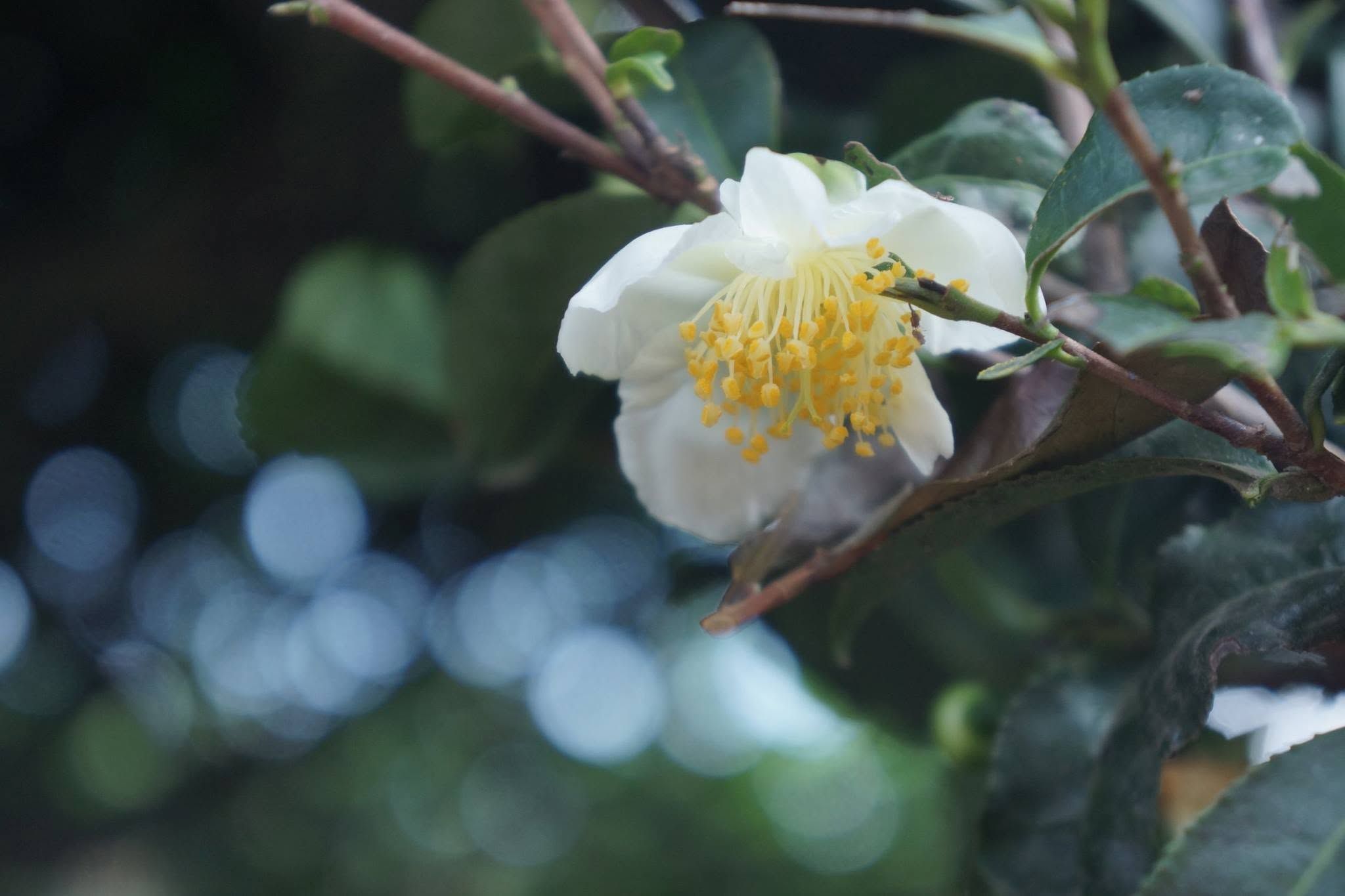
Why does the tea plant make these compounds?
The compounds behind the umami and astringency of tea are made not for people, but by the plant, for itself.
Theanine, which contributes to umami, is made mainly in the roots and carried to the young leaves. Light conditions affect how theanine is synthesised, broken down and moved, as well as how catechins, which contribute to astringency, are formed, and so they change the composition of the leaf.
What does the old practice of shading tea fields do to the plant's metabolism? I am revisiting practices passed down in tea-growing regions by looking at what happens within the plant.
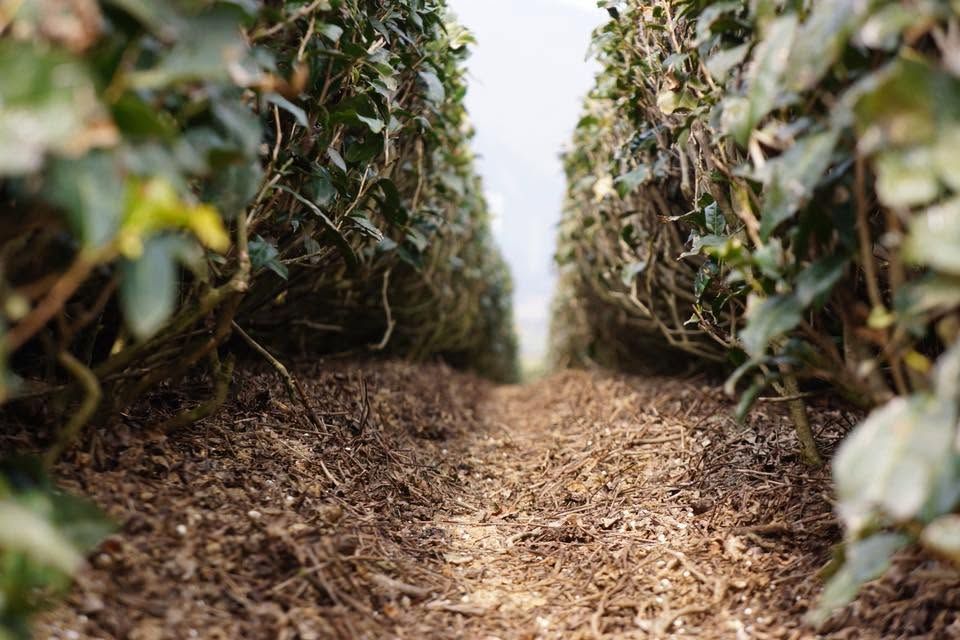
Which parts of the plant, and when?
What we use as tea is mainly the buds, leaves and stems of the tea plant.
First flush and second flush, young buds and mature leaves, leaves and stems, and also flowers and seeds. Even on a single plant, what they contain changes with the part and the season.
Phytotherapy considers a plant material by the part used and the time of harvest. What do we see when we look at Japanese tea in the same way?
How does one plant become so many different teas?
Enzymes in the leaf can be inactivated by steaming or pan-firing, or oxidation can be allowed to proceed. Black tea and oolong have long been called "fermented", but what mainly happens is oxidation by the leaf's own enzymes.
The methods of preparation also differ. Sencha brewed with hot water is close to what phytotherapy calls an infusion. Cold-brewed tea is close to a cold maceration, and simmered bancha to a decoction. With matcha, we take in not only dissolved compounds but also fine leaf particles dispersed in the liquid. This is a suspension: solid particles dispersed in a liquid.
Japanese tea traditions have developed many ways of preparing and taking in this one plant species, Camellia sinensis.
What do we find when we read the knowledge of Japanese tea in the language of phytotherapy?
Choosing tea to suit the season, hiire (the final firing), the ways tea has been handled in the Way of Tea. Japanese tea holds knowledge gathered over a long time.
Not to justify it with science, nor to dismiss it, but to reread it in contemporary language, keeping apart what can be explained, what is not yet understood, and what I choose not to reduce to numbers.
What happens to a person when they drink a cup of tea?
From aroma, taste and sensations in the mouth to the state of body and mind. I think about what happens to the person drinking tea not only as the action of compounds, but as the experience of a cup of tea.
Tea contains both theanine, which contributes to umami, and caffeine. How the two, taken together, relate to a person's attention and mood is an ongoing subject of research. But the results vary with the conditions and the people studied, and findings from studies using set doses cannot simply be applied to an everyday cup of tea. When the whole leaf is taken in, as with matcha, one consumes not only the water-soluble compounds but also the solid matter of the leaf.
Our relationship with tea is not only a matter of swallowing. There is the aroma we sense through the nose before drinking, and the aroma that rises from the back of the mouth to the nose once the tea is in the mouth. How do we receive the compounds that give tea its aroma?
Yet what happens when we drink tea cannot be explained by compounds alone. Holding the vessel, sensing the season and the place, the people drinking with us. What is happening in body and mind at that moment?
What can be measured, what can be observed, and what I choose not to reduce to numbers. Keeping these apart, I look at what happens between the plant and the person. All the questions here lead to this one.