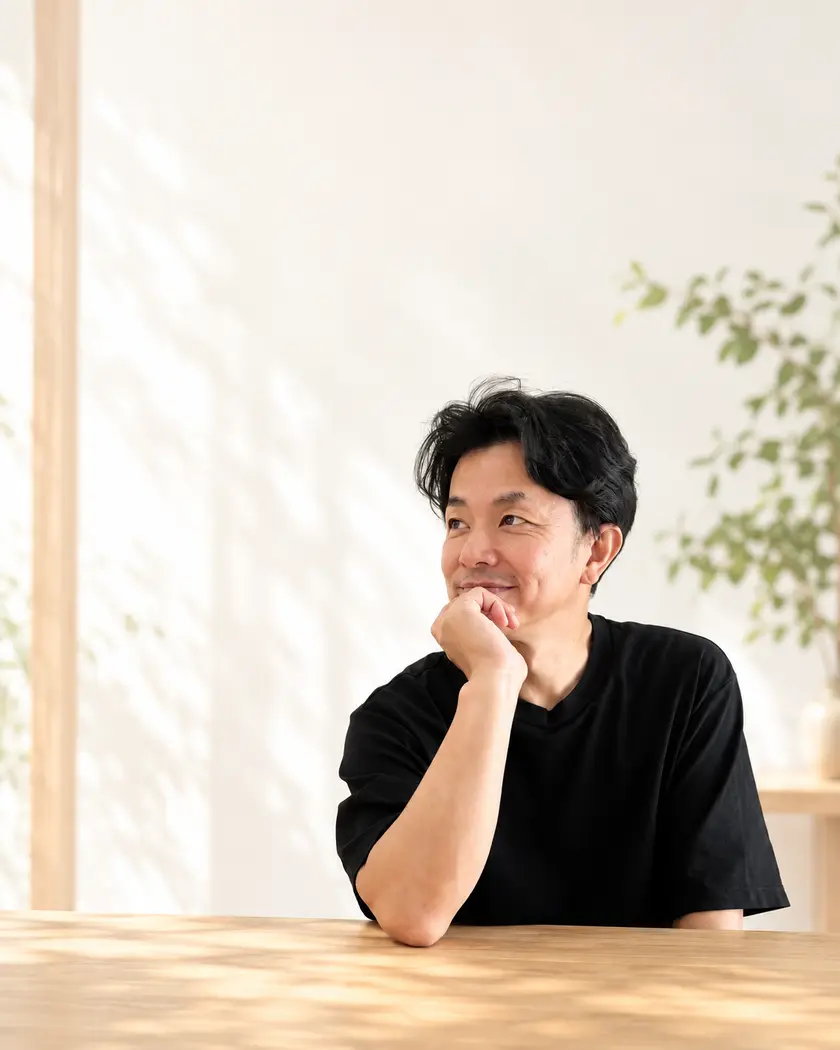
PROFILE
Ken Hagimura
Japanese Tea Taster & Blender / Phytotherapist
What happens to a person
when they drink a cup of tea?
Tea fields and tea factories have been part of my life since I was a child.
Suizawa, in Yokkaichi, Mie.
A place where people make tea, where there are factories, and where the scent of tea drifts through the town each season.
I grew up there, and I still work with tea today.
Growing up in tea
Today, as head of Maruha Tea Group, I work across the whole of Japanese tea: contract farming, sourcing, processing, blending, quality assurance and export.
Twenty-six years in the tea industry.
A tea taster and blender judges tea through the senses, then selects it, finishes it and blends it.
Appearance, liquor colour, aroma, taste, texture.
I examine the tea in front of me with all five senses, and think about what lies behind it: cultivar, growing conditions, time of plucking, method of production.
Sensory evaluation is a standard for seeing tea, built up in the body over many years.
On that foundation, I am now trying to describe tea in the language of compounds and brewing conditions as well.
Not to replace one with the other, but to widen what can be seen.
Look closely at the tea. Do not look only at the tea.
When I look at tea as a taster, I focus on the tea itself.
Aroma, taste, liquor colour, leaf shape.
One by one, I work out how that tea was made.
In the practice of the Way of Tea, I handle the same tea, but I am looking at something different.
Not only the tea, but the vessels, the arrangement of the room, the season, the movements, and the person in front of me.
Even the finest tea is only one part of the experience.
As a tea taster, I look closely at the tea.
In the tea room, I do not look only at the tea.
Over more than twenty years in both the tea trade and the Way of Tea, I have come to move between the two: looking at the tea itself, and looking at the place where tea reaches a person.
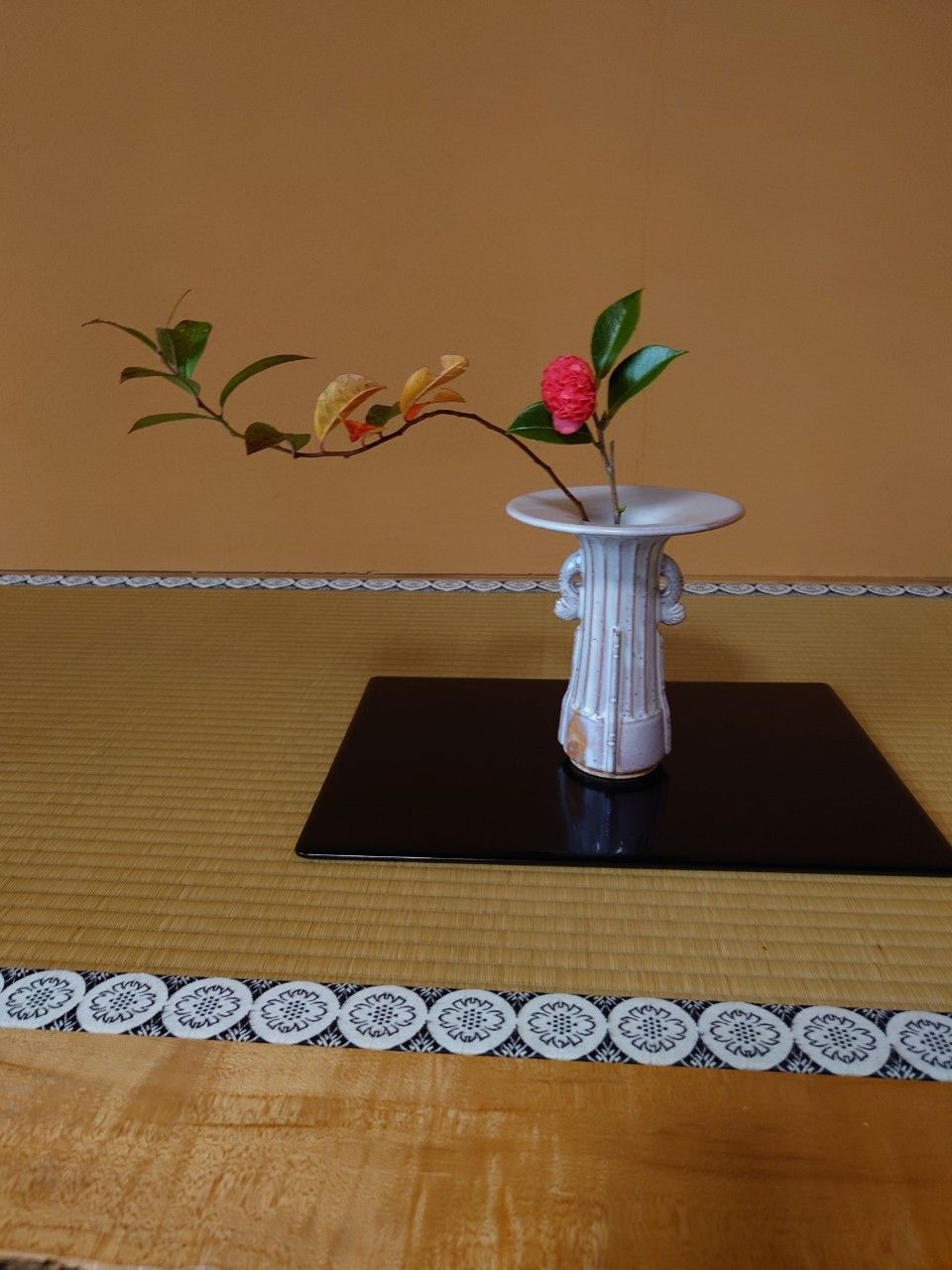
From culture to the plant
Japanese tea has a culture shaped over a long time.
The Way of Tea, vessels, seasons, gestures, growing regions, methods of production.
While engaging with tea within that world, I also became interested in seeing tea as a single plant species: Camellia sinensis.
Green tea, matcha, black tea and oolong all come from the same plant species.
Cultivation, plucking, processing, storage and brewing change its aroma, its taste, and the compounds it contains.
When I look at tea as a plant, rather than only through its culture, a different picture emerges.
Through studying phytotherapy, I have come to think about tea not only through experience and tradition, but also through its compounds and its relationship with the body.
Where they meet
As a tea taster, I judge the tea.
In the Way of Tea, I look at the place where a bowl of tea comes into being.
Through phytotherapy, I think about the relationship between plants and the body.
What interests me now is where these three meet.
Moving between the three practices, I pay attention to the senses and the body of the person drinking tea, and to what they experience in that moment.
My work has three broad themes.
First, to describe Japanese tea in the language of compounds and brewing conditions, alongside the sensory evaluation I have built over the years.
Second, to connect an understanding of what happens in people to everyday acts — how tea is chosen and finished, how it is brewed, drunk and eaten — and to new uses of tea.
Third, to create a place where practitioners of tea and phytotherapy, researchers and developers can talk while keeping their own expertise, and work together on practice and development.
I do not want what science can explain to become the limit of tea's value.
What can be explained, I try to explain with care.
What is not yet well understood, I share together with its uncertainty.
And what I choose not to reduce to numbers — the season, the gestures, the time spent drinking tea with others — I leave as it is.
I try never to confuse these three.
Why does it happen?
At the heart of it all, I think, is a simple wish: to understand why things happen.
Why does shading tea make it richer in umami?
Why do the leaves turn a deeper green?
Why is one tea strongly fragrant, and another not?
Why do we find tea astringent?
Why does one particular cup stay with us?
Even after many years with tea, I cannot explain everything that happens in front of me.
But things happen for a reason.
Thinking that way, I want to check them, one at a time.
I have long been drawn to what plants do.
The way plants, as in herbal medicine and aromatherapy, act on people through their scent and compounds. The way eating and drinking are connected to the state of the body.
That interest has led me to look at tea not only as culture or as something to enjoy, but as a plant.
The tea trade, the Way of Tea, phytotherapy, and science.
I did not choose them as a single path from the start.
But looking back, beneath them all there has always been a question: not simply to accept what happens in front of me, but to know why it happens.
What happens to a person when they drink a cup of tea?
And by knowing it, what might we see in an ordinary cup?
Knowing and tasting. Moving between the two, I continue to study tea.
Back to a cup of tea.
Biography & Credentials
Ken Hagimura
President and Representative Director, Maruha Chagyo Co., Ltd.
President and Representative Director, MARUHA AGRI Co., Ltd.
Japanese Tea Taster & Blender / AMPP-certified Medical Phytotherapist
Raised in Suizawa, Yokkaichi, Mie.
Twenty-six years in the tea industry, with experience across the chain from production to distribution, including contract farming, sourcing, processing, blending, quality assurance and export. Also engaged in farming.
2021: President, National Tea Industry Youth Federation of Japan.
Currently Chair, Ise Tea Smart Cultivation Council.
JHTC HACCP Lead Instructor
FSPCA-trained Preventive Controls Qualified Individual (PCQI)
Former JGAP and SAGP auditor.
Has practised the Way of Tea for more than twenty years.
Now studies tea while moving between the practices of the tea trade, the Way of Tea and phytotherapy, and works to bring that understanding into education, the design of tea, and new uses of tea. At the centre is one question: what happens to a person when they drink a cup of tea?
For media
Name: Ken Hagimura (萩村 健)
Title: Japanese Tea Taster & Blender / Phytotherapist
Short bio
Ken Hagimura is a Japanese tea taster and blender and an AMPP-certified medical phytotherapist, and President of Maruha Chagyo and MARUHA AGRI in Yokkaichi, Mie, Japan. With twenty-six years in the tea industry, he studies tea across the tea trade, the Way of Tea and phytotherapy, guided by one question: what happens to a person when they drink a cup of tea?
Profile updated 2026